Why Physicians in 2026 Choose Billing Services with an Integrated EHR
If you are running a medical practice in 2026, your most limited resources are time, energy, and focus.
Every denied claim, every billing query, and every hour spent charting after the clinic directly affects your income, work-life balance, and ability to focus on patients. That is why choosing the right billing and EHR setup today is no longer an IT decision; it is a business and quality-of-life decision.
This blog quickly and clearly explains why medical practices are moving toward integrated billing with an EHR in 2026 and how it helps you save time, protect revenue, and reduce daily stress.
Why This Matters to You Right Now
If your clinical documentation and billing systems are disconnected, you are likely experiencing:
- Slower payments and unpredictable cash flow
- Claim denials caused by documentation gaps
- Repeated billing questions that interrupt your day
- Hours of after-clinic charting
- Increased compliance and audit risk
In 2026, payers are stricter, audits are more common, and telehealth billing rules are complex. Practices relying on outdated or disconnected systems often lose revenue without realizing it.
The Core Problem: Disconnected Documentation and Billing
When billing teams cannot access the complete clinical context, claims are built on assumptions instead of facts. This leads to:
- Missed or under-coded charges
- Denied or delayed claims
- Extra work for physicians to clarify documentation
The result is simple: you work harder but get paid less and later.
The Smarter Solution: Billing with an Integrated EHR
An integrated EHR and billing system connects your clinical documentation directly to claims creation.
When documentation, coding, compliance, and billing operate in one unified workflow:
- Claims are created accurately the first time
- Billing teams resolve issues before submission, not after denial
- Payments arrive faster
- Compliance requirements are automatically supported
This is not about adding more technology. It is about removing friction from your daily work.
How FutureMD and talkEHR Work Together
FutureMD’s Revenue Cycle Management services, combined with talkEHR, create a seamless workflow between clinical care and billing.
talkEHR is an interactive, cloud-based EHR designed around how physicians actually work. It allows providers to create patient charts, document visits, and support billing accuracy without adding administrative burden. The system connects payers, labs, pharmacies, and all key stakeholders involved in the patient journey.
By pairing it with the best medical billing software, practices can achieve maximum efficiency and revenue protection.
How Integrated EHR Features Save You Time Every Day
Integrated systems are designed around physician efficiency:
- Cloud-based patient charts give billing teams real-time access to complete documentation, reducing back-and-forth questions
- Specialty-specific templates ensure you document exactly what is required: no more, no less
- Voice-assisted charting allows you to chart naturally instead of typing for hours
- Integrated telehealth documentation ensures virtual visits are documented and billed correctly within the same workflow
- No duplicate data entry between clinical and billing systems
The result: fewer after-hours charts and more control over your schedule.
How Integration Protects Your Revenue
Practices using integrated electronic health records software and billing solutions consistently experience:
- Higher first-pass claim acceptance rates
- Fewer denials and write-offs
- Faster reimbursement cycles
- Clear financial visibility
When billing teams have full clinical context, issues are resolved before claims are submitted, rather than after revenue is delayed.
How Integrated Systems Simplify Compliance
In 2026, compliance is not optional.
Integrated EHR systems support:
- MACRA and MIPS reporting
- ONC-certified documentation standards
- Audit-ready clinical records
- Secure, structured data storage
This reduces your exposure to audits, penalties, and lost incentive payments without adding extra administrative work.
Why This Matters Especially for New and Independent Practices
If you are starting or growing a practice, inefficiency is expensive.
Integrated billing and EHR systems allow you to:
- Scale without hiring excessive administrative staff
- Maintain predictable cash flow
- Spend more time with patients
- Avoid burnout early in your career
You should not have to choose between good medicine and a sustainable practice.
Proven Results: UNMC Case Study
The University of Nebraska Medical Center (UNMC) – University Dental Associates faced slow billing, high receivables, and fragmented records.
By adopting talkEHR alongside FutureMD’s Revenue Cycle Management services, the organization:
- Streamlined documentation and billing workflows
- Reduced billing turnaround time and increased reimbursements
- Gained real-time access to analytics and fully digital records
- Maintained strong security and regulatory compliance
This case demonstrates how integrated EHR and billing improve both operational efficiency and financial performance.
The Bottom Line
In 2026, integrated billing and EHR systems are no longer optional. They directly determine how quickly you get paid, how much time you spend on administration, and how sustainable your practice is long-term. If you want a billing and EHR solution that works the way physicians work, an integrated system is the smartest move you can make for your practice.
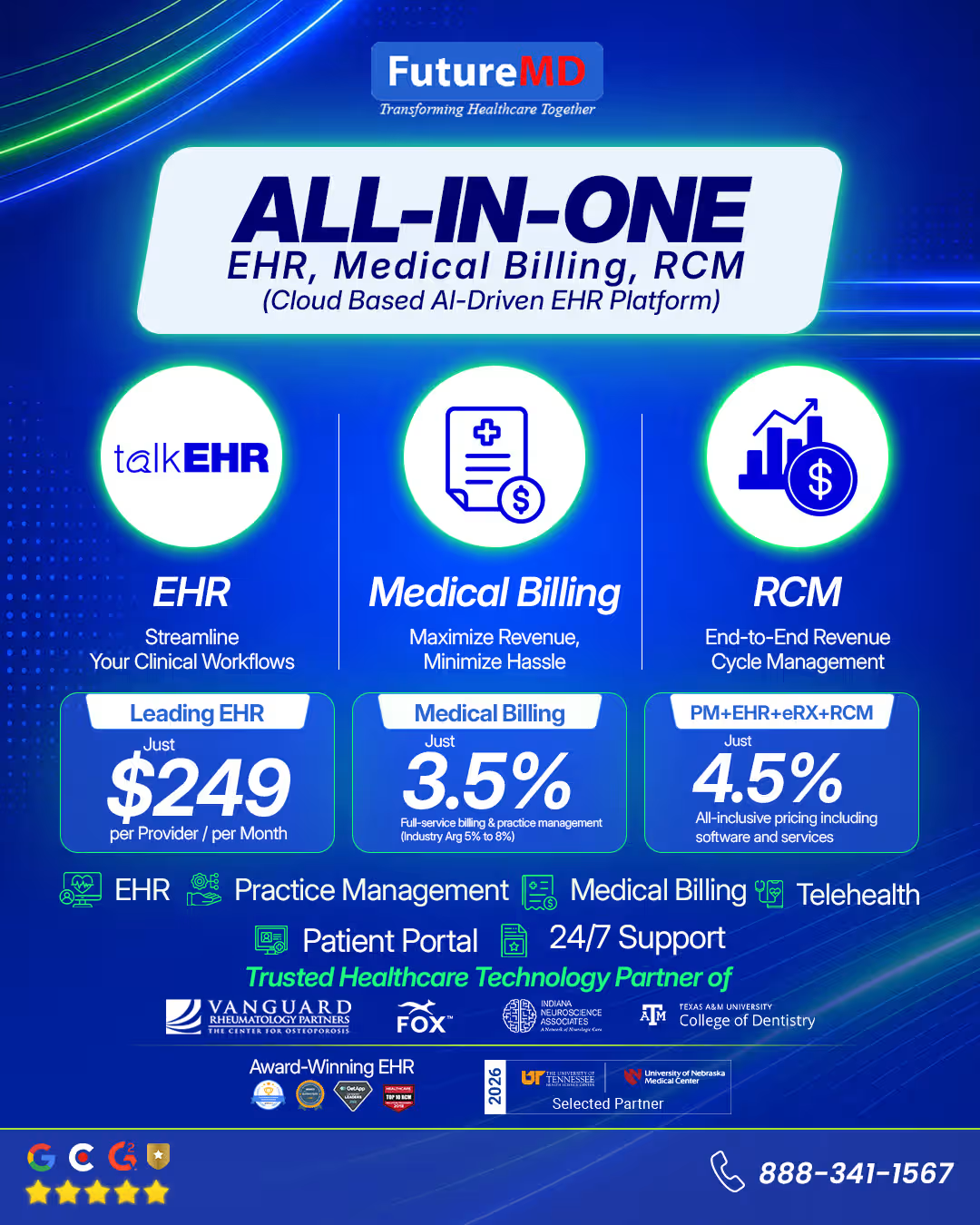
FutureMD offers billing, practice management, and EHR in one connected workflow, designed to support efficiency, accuracy, and long-term growth.
See how integrated billing and EHR can work for your practice. Schedule a demo with FutureMD.
Key Takeaways
- Integrated billing with EHR reduces errors, denials, and payment delays
- Disconnected systems increase administrative work and revenue loss
- Real-time access to complete charts improves billing accuracy
- Specialty templates and voice charting reduce documentation burden
- Integrated workflows support compliance and audit readiness
- Physicians regain time, focus, and financial control