The Role of AI in Enhancing the Patient Care Journey
Imagine a healthcare practice where patient intake forms are completed before the appointment, clinical documentation is automatically generated during the consultation, and follow-up reminders are sent without staff intervention.
Instead of managing administrative bottlenecks, physicians and care teams can focus entirely on delivering quality care.
This is no longer a future vision; it is the reality of AI in healthcare.
AI is transforming the patient care journey by improving operational efficiency, enhancing patient engagement, and supporting clinical decision-making. From intelligent scheduling to predictive analytics and remote monitoring, AI helps healthcare organizations streamline workflows while improving patient experiences.
In this blog, we explore how AI supports each stage of the patient care journey and how healthcare practices can leverage these technologies to deliver more efficient and patient-centered care.
Understanding the Modern Patient Care Journey
Traditionally, the patient care journey includes several key stages:
- Awareness and research
- Access to care and appointment scheduling
- Diagnosis and treatment
- Follow-up and recovery
- Preventive and long-term care
However, many healthcare practices face operational challenges across these stages. Long appointment wait times, administrative overload, fragmented patient records, and inefficient communication can impact both patient satisfaction and clinical productivity.
AI technologies help address these issues by enabling healthcare systems to analyze large datasets, automate workflows, and generate predictive insights that support better care delivery.
These capabilities allow providers to move toward a more proactive and patient-centered model of care.
1. AI in Patient Access and Appointment Management
The first step in the patient journey is access to care. For many healthcare organizations, front-desk operations and appointment scheduling consume a significant amount of staff time.
AI-powered systems can streamline this process through:
- Intelligent scheduling algorithms
- Virtual assistants and chatbots
- Automated patient triage
- Smart appointment reminders
These tools allow patients to schedule appointments online, receive automated confirmations, and reschedule visits without requiring manual staff intervention.
From a practice management perspective, AI scheduling tools can also optimize provider availability and reduce no-show rates.
FutureMD’s practice management system ssupports these workflows by centralizing scheduling, patient registration, billing, and reporting within a single system, allowing clinics to operate more efficiently while improving patient access.
2. Enhancing Clinical Decision Support
AI is also transforming what happens inside the exam room. By analyzing large volumes of clinical data, including imaging, lab results, and patient history, AI systems can assist physicians in identifying patterns and potential diagnoses more quickly.
For example, AI-driven medical imaging tools can analyze X-rays, CT scans, and MRI images to detect early signs of diseases such as cancer, fractures, or infections. This level of data-driven analysis can improve diagnostic accuracy and allow providers to intervene earlier in the disease progression.
AI-powered clinical decision support systems also help physicians by:
- Flagging abnormal results
- Suggesting evidence-based treatment pathways
- Identifying high-risk patients
- Supporting medication management
Importantly, these systems are designed to support, not replace, clinical expertise. By handling complex data analysis, AI allows clinicians to focus on patient interaction and clinical judgment.
3. Automating Clinical Documentation and Workflow
Administrative documentation remains one of the biggest sources of physician burnout. Clinicians often spend hours each day entering notes, updating electronic health records (EHRs), and managing paperwork.
AI-powered medical scribes and voice-recognition systems are helping address this issue. These tools can automatically transcribe patient-physician conversations and generate structured clinical notes that integrate directly into the EHR system.
This automation can reduce documentation time while improving data accuracy and consistency. In addition, AI can help automate other workflow processes such as coding, billing, and claims processing.
FutureMD’s AI-enhanced talkEHR helps providers automate clinical documentation, streamline patient records, and align clinical workflows with billing and compliance requirements. By connecting documentation, scheduling, and revenue workflows into one system, practices can reduce administrative burden while maintaining focus on patient care.
4. Improving Patient Engagement and Communication
Patient engagement is another critical component of the care journey. Many patients struggle with medication adherence, follow-up appointments, and understanding their treatment plans.
AI-powered patient engagement platforms can bridge this gap by delivering personalized communication through:
- Automated reminders for appointments and medications
- Patient portals for secure messaging and health records
- AI chatbots that answer common healthcare questions
- Educational resources tailored to patient conditions
These tools help maintain continuous communication between providers and patients, improving adherence and patient satisfaction.
From a healthcare practice perspective, automated communication systems reduce staff workload while ensuring that patients remain actively engaged in their care.
FutureMD’s patient experience management tools (talkEHR) help practices strengthen patient relationships through digital communication, feedback systems, and streamlined patient interactions.
5. Remote Monitoring and Preventive Care
One of the most impactful applications of AI in healthcare is remote patient monitoring (RPM). With the growing adoption of wearable devices and connected health technologies, providers can now track patient health data in real time.
AI systems can analyze data from wearable devices such as heart rate monitors, glucose sensors, and blood pressure trackers to identify early warning signs of health deterioration. When abnormalities are detected, healthcare providers can intervene before the condition becomes critical.
This proactive monitoring approach can reduce hospitalizations and improve long-term outcomes for patients with chronic conditions such as diabetes, cardiovascular disease, and respiratory disorders.
FutureMD’s HIPAA-compliant telehealth solution enables providers to conduct secure video visits, monitor patients remotely, and maintain continuity of care without requiring in-person appointments.
6. Predictive Analytics and Personalized Care
Another major advantage of AI is its ability to enable personalized medicine. By analyzing patient history, genetic information, lifestyle data, and population health trends, AI algorithms can generate predictive insights that guide treatment decisions.
Predictive analytics can help healthcare providers:
- Identify patients at risk of complications
- Recommend personalized treatment plans
- Optimize preventive care strategies
- Improve population health management
This data-driven approach allows healthcare practices to move away from reactive care and toward preventive, precision-based medicine.
FutureMD Solutions combines predictive analytics, automation, and integrated reporting tools to help providers make more informed clinical and operational decisions.
The Future of AI in the Patient Care Journey
As AI technologies continue to evolve, their role in healthcare will only expand. Future innovations may include:
- Advanced predictive diagnostics
- AI-assisted treatment planning
- Intelligent population health management
- More sophisticated virtual care systems
However, the future of healthcare will not be defined by AI alone. Instead, it will be shaped by a collaborative model where technology enhances the capabilities of healthcare professionals rather than replacing them.
AI will continue to serve as a powerful support system, helping physicians deliver more efficient, data-driven, and patient-centered care.
Human + AI: A Collaborative Future
Artificial intelligence is not designed to replace physicians; it is built to enhance their capabilities.
By handling data analysis, scheduling, documentation, and other administrative tasks, AI allows healthcare professionals to focus on what truly matters:
- Compassionate patient care
- Clinical expertise and decision-making
- Meaningful patient interactions
The result is a healthcare system that is more efficient, more connected, and ultimately more patient-centered.
All-in-One Healthcare Solutions Built for Modern Practices
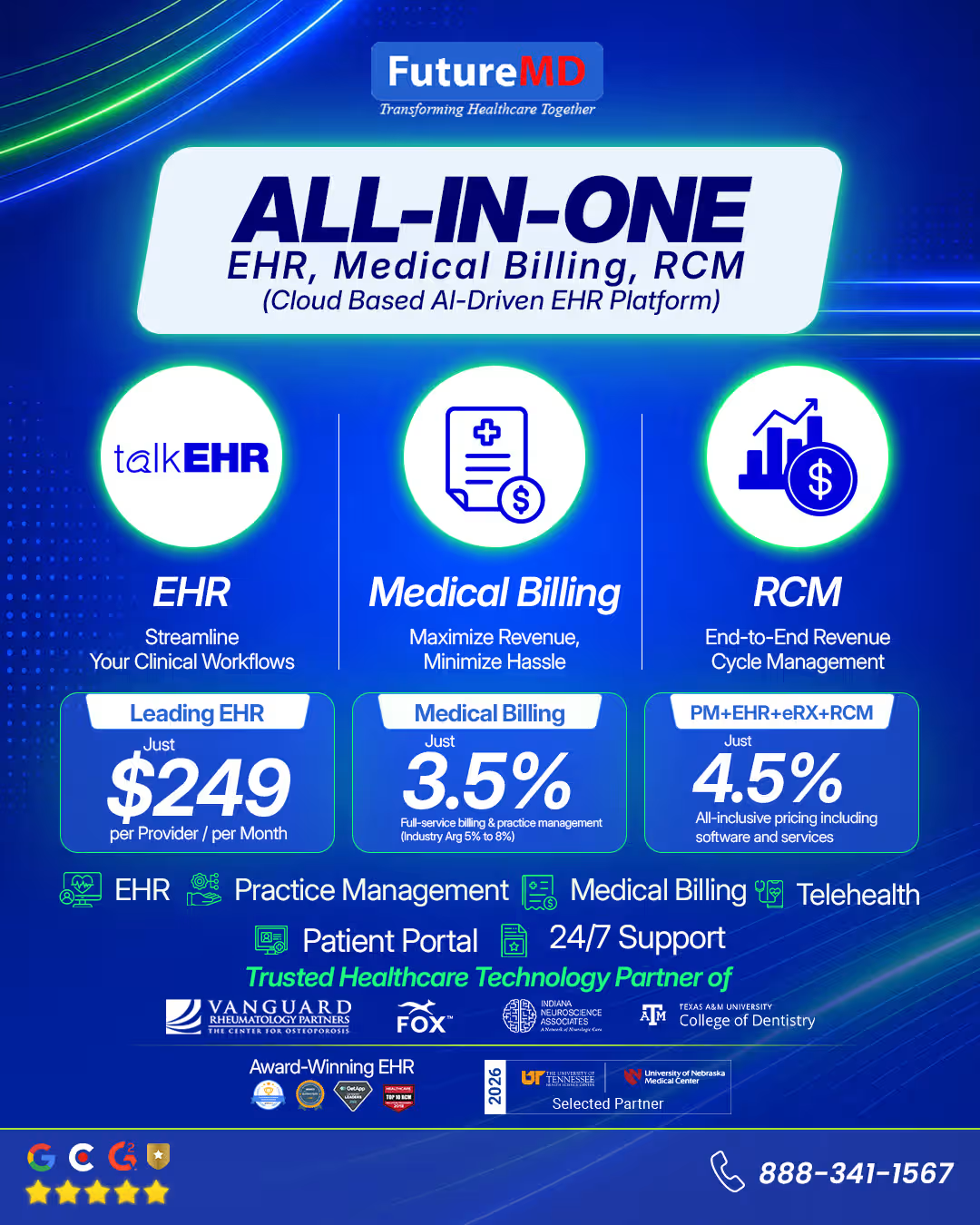
FutureMD Solutions provides an integrated ecosystem designed specifically for modern healthcare practices. With powerful solutions like talkEHR for electronic health records, intelligent practice management tools, medical revenue cycle management, patient experience platforms, and secure telehealth, FutureMD helps providers streamline operations while enhancing patient outcomes.
In addition to advanced software, FutureMD offers expert services including medical billing and coding, medical transcription, physician credentialing, front desk assistance, staff augmentation, DME billing, chronic care management (CCM), and complimentary medical billing audits, ensuring practices have the operational support they need to grow.
Ready to modernize your practice with AI-powered healthcare solutions? Discover how FutureMD’s integrated platform can streamline workflows, enhance patient engagement, and improve financial performance for your practice.
Key Takeaways
- AI improves patient access through automated scheduling and chatbots
- Clinical workflows become faster with AI documentation and diagnostics
- Patient engagement increases through personalized communication and reminders
- Predictive analytics enable personalized treatment
- AI supports healthcare professionals rather than replacing them